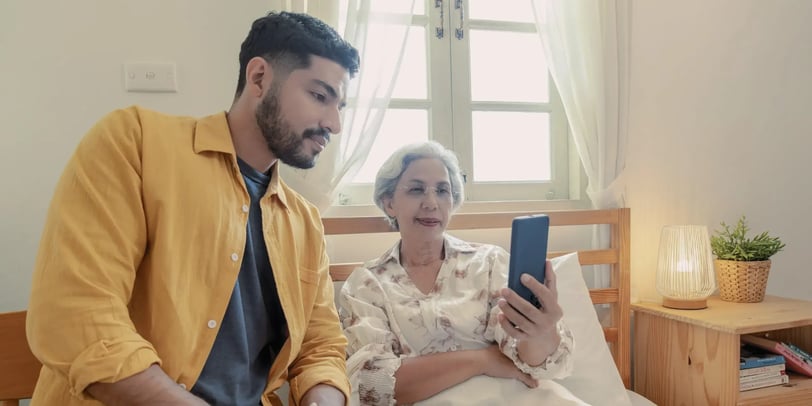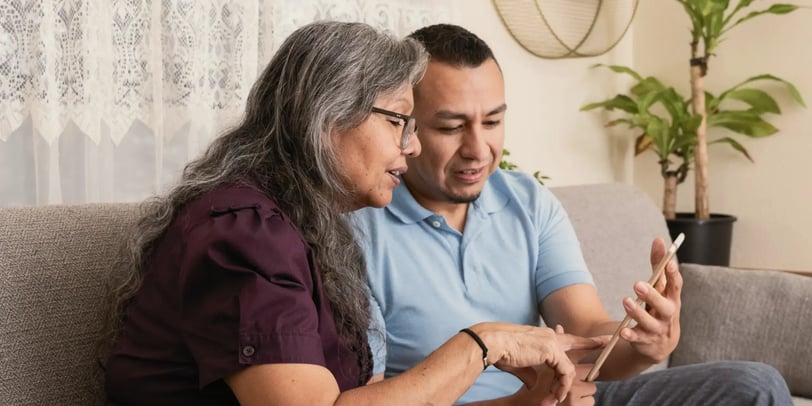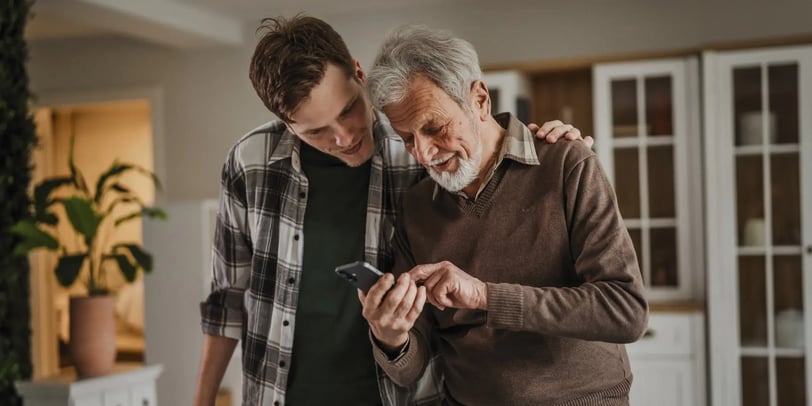






Hospice and palliative care are deeply personal, built on close, compassionate interactions between caregivers, patients, and their families. While it may seem counterintuitive to add virtual visits and patient engagement tools to such a sensitive environment, these technologies don’t replace the hands-on care that defines hospice—they enhance it.
Virtual visits and patient engagement tools improve communication and coordination while saving time, allowing providers to focus on what matters most: delivering high-quality, compassionate care to patients and their families.
What are Virtual Visits & Patient Engagement Tools?
Virtual visits offer patients a convenient, digital, immediate way to meet personally with their healthcare providers without the time and effort of travel. Through real-time secure video, patients can discuss concerns with their care team, receive medical advice, and even show physical symptoms for a more accurate diagnosis. Virtual visits eliminate the risk of transmitting diseases and increase accessibility–allowing caregivers to tailor their consultations to meet individual patient needs, preferences, and conditions.
Patient engagement tools are technologies designed to keep patients and caregivers informed, connected, and involved in the care process between in-person visits. These include secure messaging, quick, automated check-ins or tuck-ins, and educational resources that can be easily and automatically delivered via text, email, or over-the-phone interactive voice response (IVR). These tools let care teams stay connected to hospice caregivers as the patient’s symptoms change, offering better guidance in managing symptoms, easy-to-access educational resources, and faster access to care when needed most so families are empowered to make more informed decisions.
Patient Engagement Tools & Strategies for Improving Hospice Care:
Together, virtual visits and patient engagement tools improve the hospice experience by making care more accessible, responsive, and personalized. Here are some essential ways patient engagement tools help reduce the burden on caregivers and provide peace of mind to patients.
Visit Reminders
One easy, effective patient engagement tool in hospice and palliative care is visit reminders, which streamline communication between caregivers and interdisciplinary team (IDT) members. Reminders are sent to the patient’s caregiver the night before and the morning of a scheduled visit, saving providers time making these calls in person and without sacrificing care quality.
Custom Hospice Quality Surveys
Providers anxiously await the results of their high-stakes CHAPS Hospice Surveys. But what if there was a way to monitor patients’ and caregivers’ care experiences as they receive them so you have a chance to make changes before they complete their CMS surveys?
With patient engagement tools like automated on-the-go surveys, you can. Not only can providers meet compliance requirements, but also actively involve patients and families in shaping their care experience. This structured, proactive approach enhances communication, boosts responsiveness, and supports high-quality care throughout hospice and palliative care services. No aspect of the patient’s experience is overlooked.
Surveys can be customized to include critical questions like:
How would you rate the care quality you received today?
How would you rate the timeliness of care you received today?
How well did your care provider answer your questions about care?
Would you have called 911 if your needs had not been addressed in your most recent call?
Imagine staff having the time to proactively call and quickly address a minor challenge from a survey response before it snowballs into a major one—rather than a long call calming an irate caregiver. Or during transitions such as the shift from HIS (Hospice Item Set) to HOPE (Hospice Outcomes & Patient Evaluation) or within the Special Focus Program (SFP), custom surveys help organizations track care quality and make timely adjustments. Only automation gives providers the capacity to improve the care experience like this. Virtual Opportunities
Virtual visits and patient engagement platforms represent a transformative part of virtual opportunities provided by hospice and palliative care. They allow Home Health Aides (HHAs) and Registered Nurses (RNs) to maintain contact with patients for quick assessments of symptoms and overall well-being.
Virtual visits also give providers critical, eyes-on access to view patients in real time, to assess their conditions, make treatment recommendations, and coordinate care faster than dispatching a visit nurse, especially when an in-person visit isn’t truly needed. They can help providers see the what’s actually been delivered by pharmacies and Durable Medical Equipment (DME) providers, rather than relying on vague caregiver descriptions.
Beyond direct clinical care, virtual opportunities improve Social Determinants of Health (SDOH) and promote health equity by increasing access to essential clinical touchpoints, patient education, and the reach of social services. These patient engagement platforms streamline volunteer services by making participation and recruitment more accessible, and they enhance bereavement support through efficient engagement with family members, including virtual group sessions.
Patient Education Library
One key component of patient engagement technology in hospice and palliative care is the use of a patient engagement library. These digital libraries provide caregivers and patients with access to a wealth of critical resources tailored to their specific needs. In the sensitive context of end-of-life care, the library can provide reminders on managing symptoms related to death and dying and remind families of what to expect during this emotional process. Beyond clinical care, these libraries also educate caregivers about community support, bereavement services, and spiritual resources, offering holistic support during a time of profound need.
Stakeholder Engagement
In addition to enhancing patient and caregiver experiences, patient engagement technology can be used to enhance care-partner relationships. For example:
Community Liaison Outreach
Automate communications between care providers and their established referral base, fostering collaboration, transparency and strengthening relationships between healthcare providers, ultimately improving patient care coordination for everyone:
Requests for consultations and evaluations for potential hospice or palliative care patients, for a timely and proactive outreach.
Provide status updates on referrals, such as whether the patient has been admitted, is ineligible for services, or has refused care.
For cases where the patient is not admitted, the outreach system can recommend alternative post-acute services, effectively closing the communication loop with referring providers.
Human Resources (HR)
Automated communications enhance patient care by keeping staff informed and connected in every situation.
Manage emergency disaster notifications, ensuring employees receive timely information and can respond quickly to crises.
Handle general notifications, such as staffing updates, schedule changes, and other operational adjustments, which help maintain smooth patient care.
Monitor employee health through alerts and notifications, protecting both staff and patients.
Employee satisfaction surveys provide valuable insights into staff morale and areas for improvement.
Thanks to HR technologies, home health and hospice agencies have a more efficient, engaged, and responsive workforce.
Embrace Virtual Visits & Patient Engagement Tools with CareXM
Virtual visits and patient engagement tools can transform the hospice experience for patients, caregivers, and providers. At CareXM, we aim to elevate the experience for patients, caregivers, and your entire healthcare team. With our innovative technology, including virtual visits, remote patient monitoring, and patient engagement programs, agencies throughout the healthcare field have successfully managed increased patient loads and enhanced staff satisfaction. Whether you need support with triage staffing or patient engagement solutions, CareXM will transform your patient care approach. Let’s elevate the care experience together. By partnering with CareXM, your hospice team can seamlessly incorporate these tools to better connect, communicate, and care for those who matter most—your patients and their loved ones.
In this article