


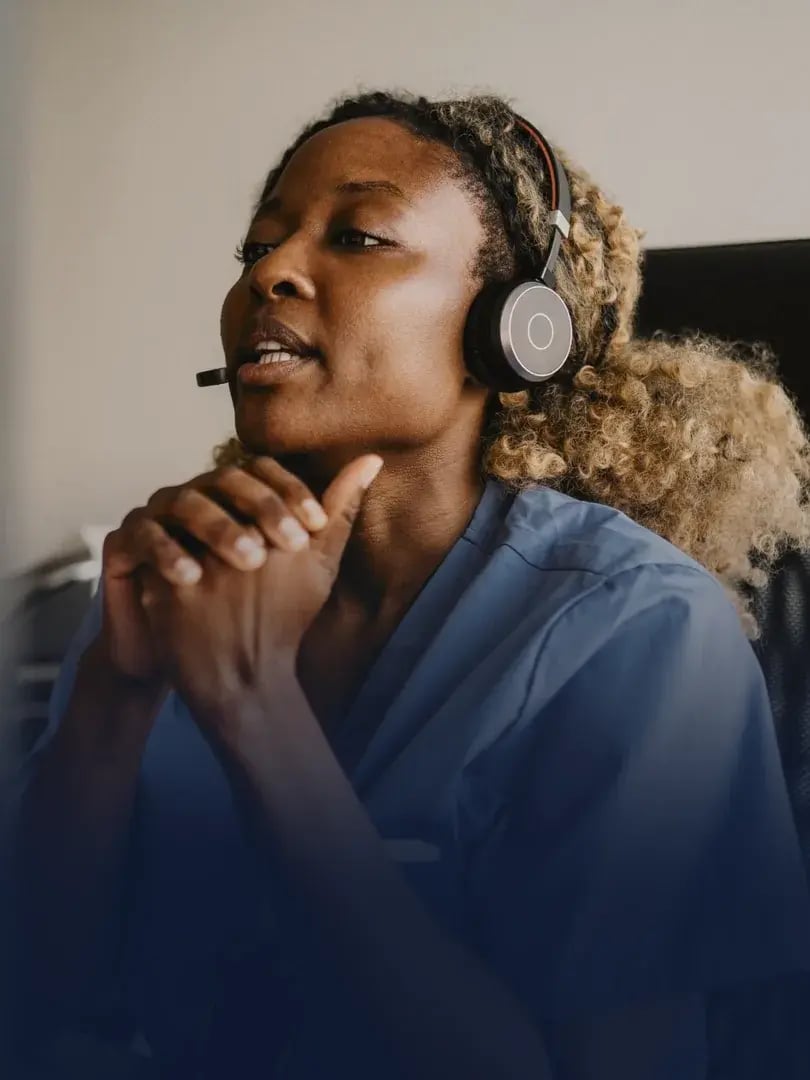


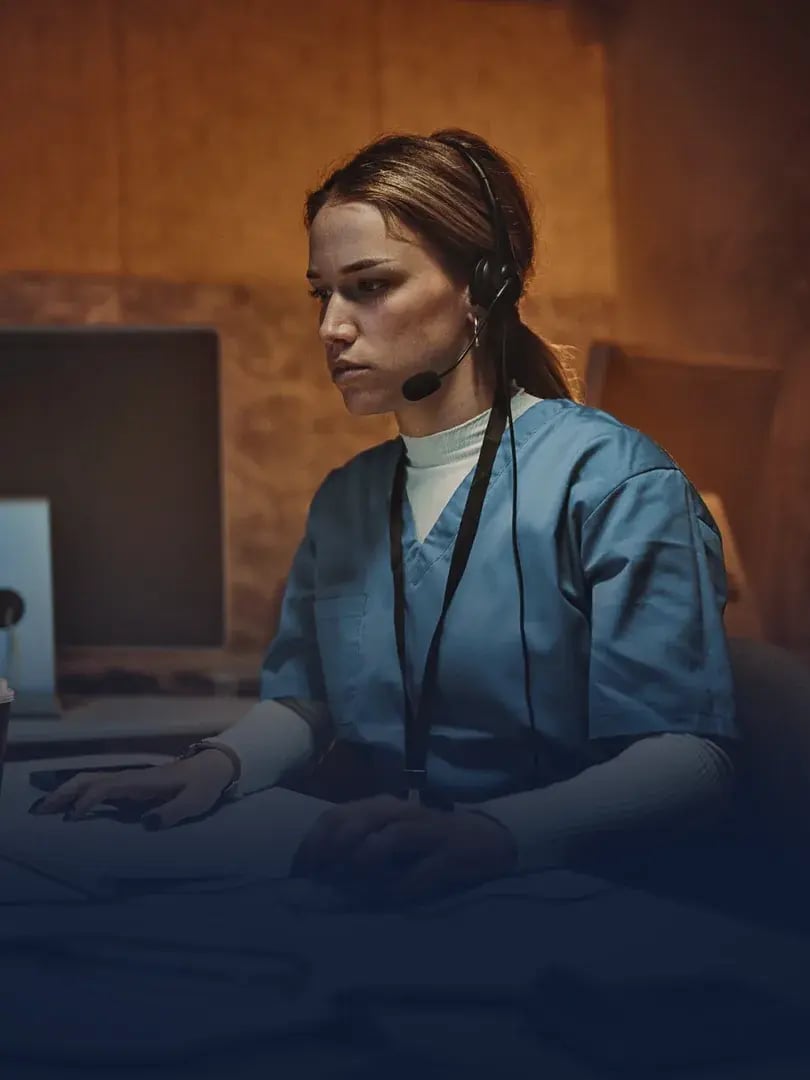


Patient care doesn’t adhere to business hours, and neither does pain, worry, or caregiver stress. So, when someone calls in at 2 a.m., will they be met with a generic script, or will the triage nurse have the guidance and flexibility to support the patient’s needs in that moment?
Customizable triage protocols give nurses the clinical guardrails to make fast, confident decisions in the after-hours. Decisions that honor patient preferences, support caregivers, and stay aligned with the plan of care, even when the primary care team is off duty.
What it means to customize protocols in after-hours triage
Depending on the service line, protocols will look different, but at the core, customization means tailoring how triage nurses handle after-hours calls based on your organization’s specific care practices, escalation rules, and patient populations.
This doesn’t necessarily mean you need to establish rigid checklists or branching logic. It means creating a triage framework that reflects how your team makes decisions, and clarifying where after-hours nurses should use clinical judgment and where they should follow defined instructions.
Key ways after-hours protocols can be customized
Program-Specific Goals
This is the best place to start. If your agency supports multiple service lines like home health, hospice, and palliative care, each will have a different goal and approach to after-hours triage.
Generic protocols and scripts won’t help you meet service-specific care goals. Tailoring your protocols helps ensure patients receive care that reflects their treatment path and helps establish those clinical guardrails for triage nurses.
Think of it in terms of the core program goal:
- Hospice protocols prioritize comfort and minimize transfers
- Palliative care protocols might allow for more aggressive symptom interventions
- Home health protocols may focus more on stabilizing to avoid unnecessary visits or readmissions
Escalation Guidelines
Make it clear what should be escalated and what shouldn’t. If clear rules are lacking, triage nurses may over- or under-escalate, both of which could lead to a poor patient experience. Start by defining when it’s appropriate to involve the on-call nurse, when a visit should be dispatched, and when reassurance and follow-up are enough.
Guidance should look different based on your service lines as well. For example, in home health, mild swelling might be logged and held for the clinical team to address in the morning. In hospice, that same symptom might warrant a callback or a visit if it signals disease progression.
Patient Preferences & Standing Orders
Custom protocols can also incorporate known care goals and physician directives.
- A hospice patient when a DNR and comfort-only directive may not need escalation for labored breathing unless distress is extreme.
- A home health patient with a standing diuretic order may not need to wait for a callback to begin treatment.
When triage supports known patient preferences, it prevents unnecessary interventions, avoidable ER visits, and builds trust with patients and families.
Communication Protocols
So far we’ve focused on clinical guidance, but internal communication matters, too. Who gets notified? How? When?
Looking at hospice as an example, does an escalation require others on the care team to be informed? Or do you only alert others when a visit is dispatched? Should the on-call nurse be looped into every encounter, or just the exceptions?
Keeping communication workflows tight prevents handoff gaps and supports closed-loop coordination. You should also consider reviewing the coordination tools your team has available, and understanding how well they enable connection.
How can you manage custom protocols after-hours?
By now, you likely see the value, but making this work consistently at scale can feel daunting. Here’s how you can tackle it:
Add contextual notes to protocols
Insert clear, scenario-based notes into protocols and patient records. For example:
- Do not escalate nausea unless it lasts > 4 hours
- Patient has standing morphine order, caregiver is trained
While manual, this keeps autonomy embedded in the workflow and gives nurses greater confidence in their decisions.
Use technology to support protocol execution
Technology can support triage nurses in real time. At CareXM, our AI-powered decision support analyzes triage notes and organization-specific protocols to deliver guidance that ensures triage encounters and escalations are consistent, accurate, and aligned with your care standards. It reduces cognitive overload while improving adherence to protocols.
Getting it right in the after-hours
After-hours triage is one of the highest-risk, highest-impact touchpoints in home-based care. The right response can prevent a crisis, reassure patients and families, and protect your quality scores. But that only happens when triage nurses are equipped with protocols that reflect your agency’s standards and care goals, and not just a generic script.
Customizable protocols give triage nurses the structure to act decisively and patients the continuity they deserve. If your current approach still relies on a one-size-fits-all model, it’s time to take a closer look. Start by asking:
- Are protocols aligned with our care models?
- Can nurses easily follow them under pressure?
- Do we have visibility into how after-hours decisions are made?
- Have we asked our after-hours team what’s working and what’s not?
Getting triage right after-hours starts by defining what “right” looks like for your organization and setting your team up to deliver it for every call after 5 p.m.
In this article